

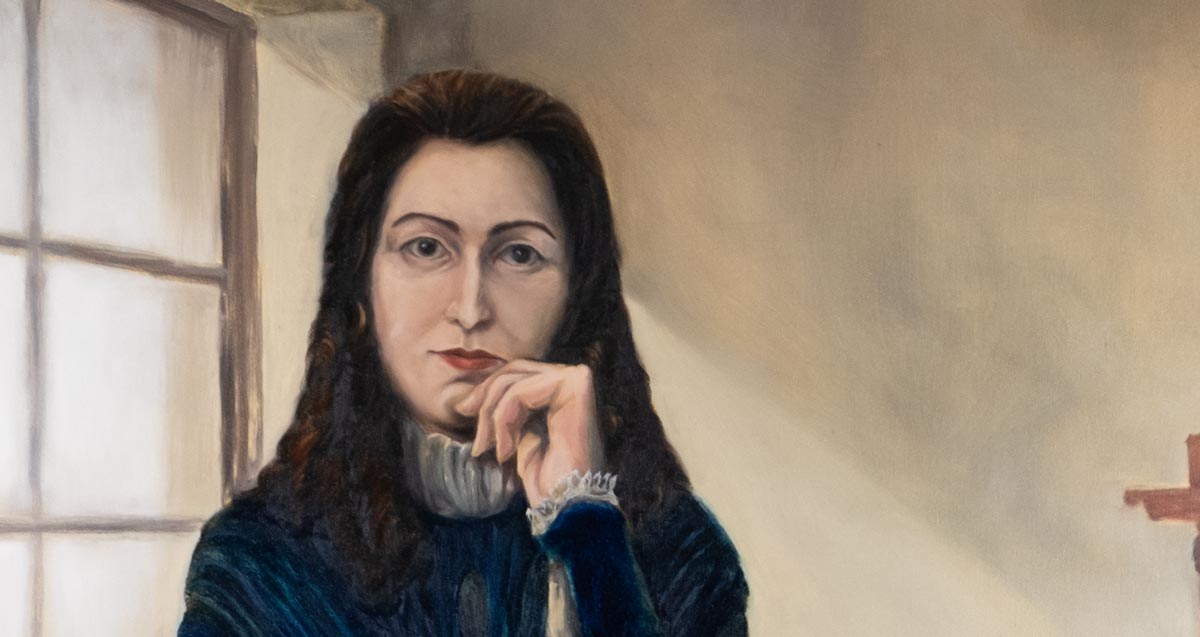
Flora Tristan
Writer, Socialist, Activist
Flora Tristan
* 7 April 1803 (Paris), † 14 November 1844 (Bordeaux)
Flora Tristan was a visionary Peruvian-French socialist who was one of the first women to fight tirelessly for better conditions for workers. In 1843, years before Marx, she set out the call for proletarian unity in her magnum opus "Union Ouvrière" (Workers’ Union). Her courageous pioneering work for social justice and equality makes her one of the most significant, yet often overlooked, figures of the early labour movement.
About the portrait
An encounter in a printing house named "Worms", Paris Montmartre
Flora Tristan made many enemies with her burning passion and her audacity to go anywhere – as a woman, mon dieu! – but this did not bother her; she wanted to do good and was absolutely convinced of her belief that only a united workers’ movement would carry enough political weight to improve the living and working conditions of the working class.
"Workers unite – in union lays power."
These words appear on the title page of Flora Tristan’s "Union Ouvrière" (1843). Marx and Engels’ "Communist Manifesto", which contains the slogan “Workers of the world, unite!”, was published in 1848. It would be mischievous to read too much into this. Tristan was at least known to Marx by name. Marx was living in Paris when she was promoting “Union Ouvrière”. She was something of a character on the socialist scene. It is highly likely that they even met in person at the Worms printing house: both had work printed there in the autumn of 1843.
I can picture Tristan in the print shop: she is examining the proofs. Marx walks in and puts on airs. Will she speak to him?
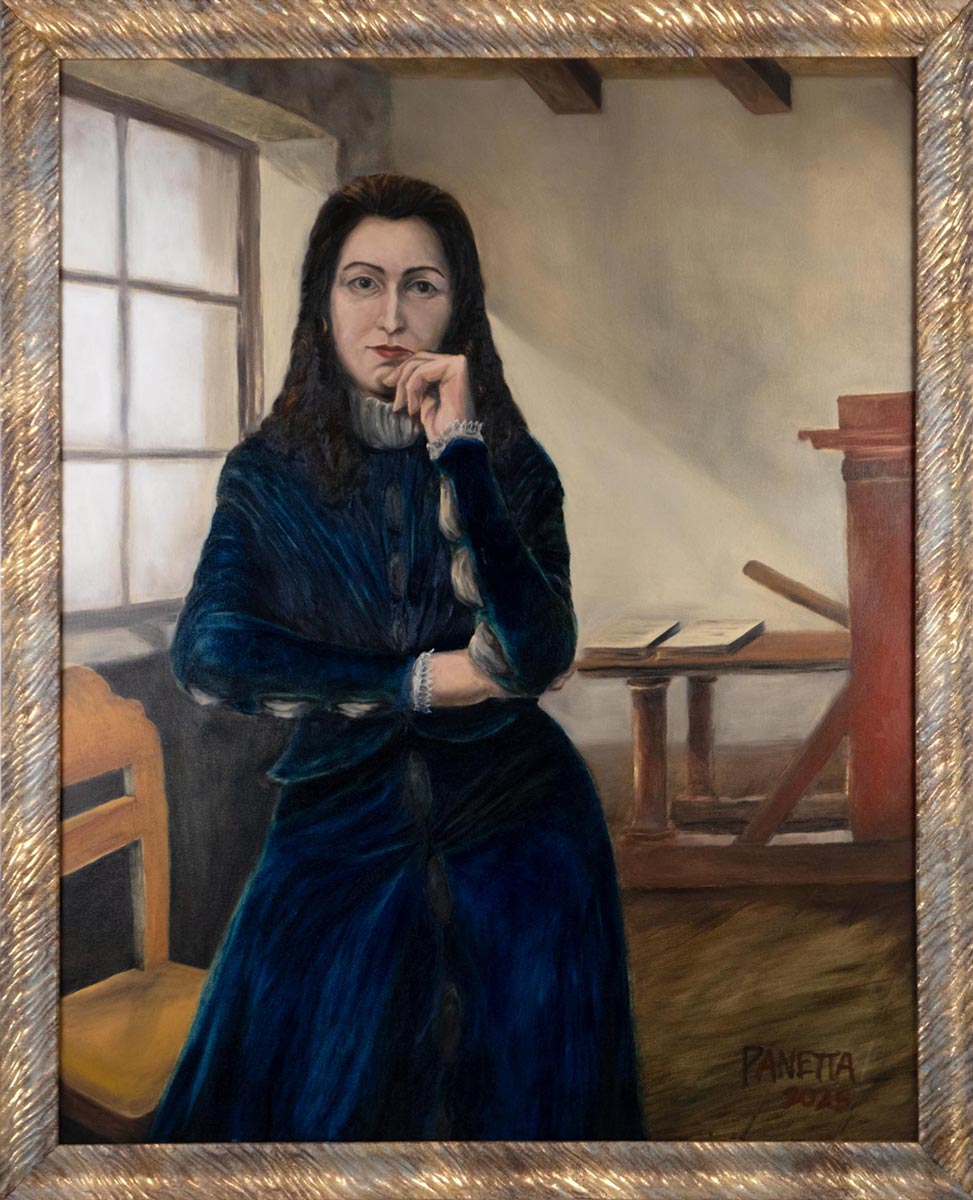
Flora Tristan had her portrait painted – by her own account – more than 20 times, without ever being satisfied with the result.
The painters didn’t understand her; they wanted to portray her as a ‘little lady’, which she simply wasn’t. I’m lending her one of my power poses, dressing her in a gown I’ve taken from a French fashion magazine from 1844, and placing her in the print shop opposite an imaginary Marx: I wonder if he’s mansplaining her right now?
Historical material
Depictions of Flora Tristan and the cover of her most important work: "L'union ouvrière" (Workers' Union) from 1843
(to enlarge and more info click on the image)
-
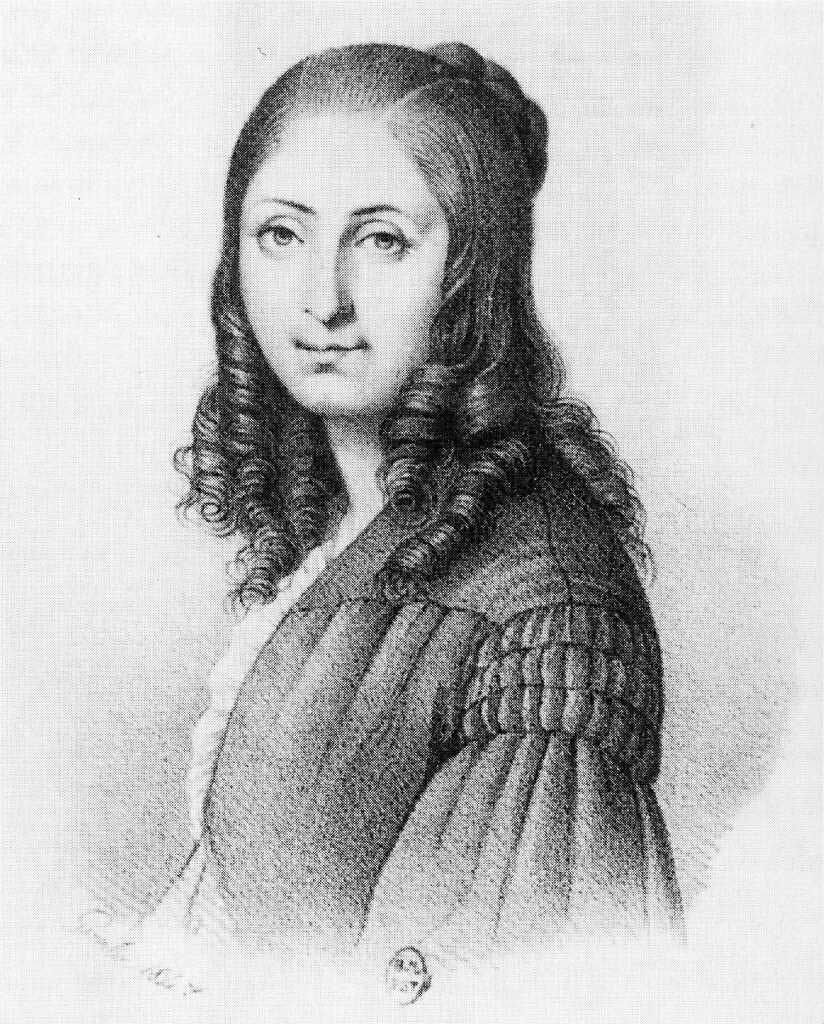 A posthumous lithograph (1847) of Flora Tristan, based on a drawing by Jules Laure. Laure was a student of Ingres, and so it is unclear to what extent the depiction of the thinker follows convention rather than Tristan's self-image.
-
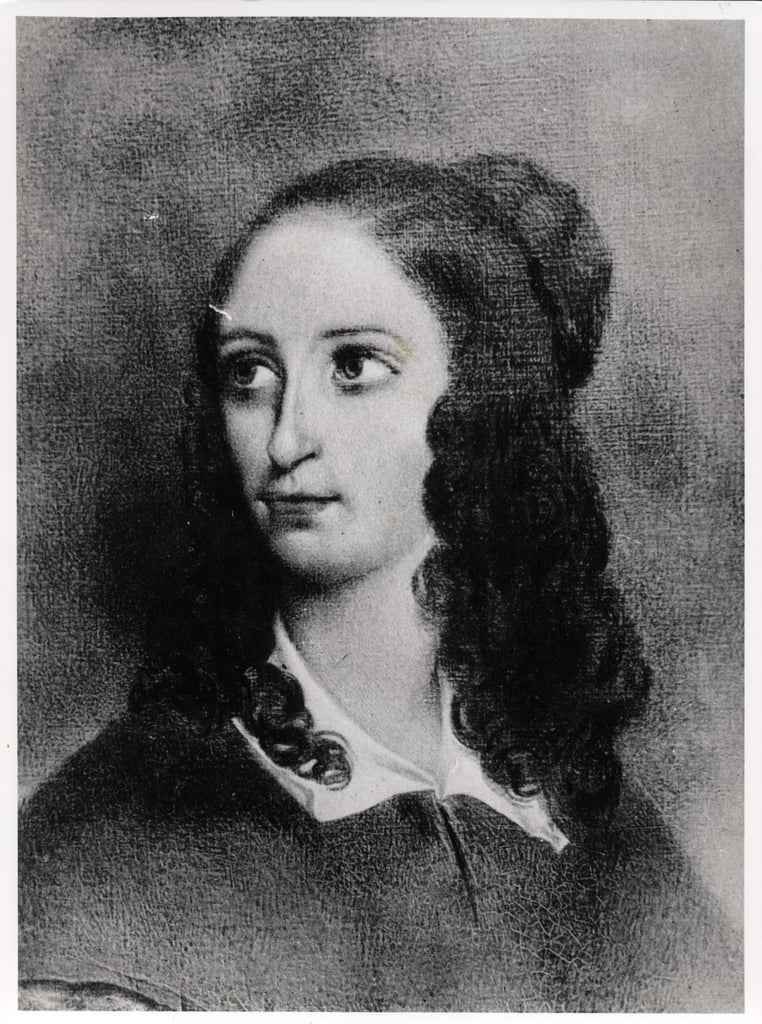 This portrait closely resembles a version published in 1839 in the magazine Les Belles Femmes de Paris (The Beautiful Women of Paris). The idealised nose, high forehead and large eyes corresponded to the beauty ideal of the time.
-
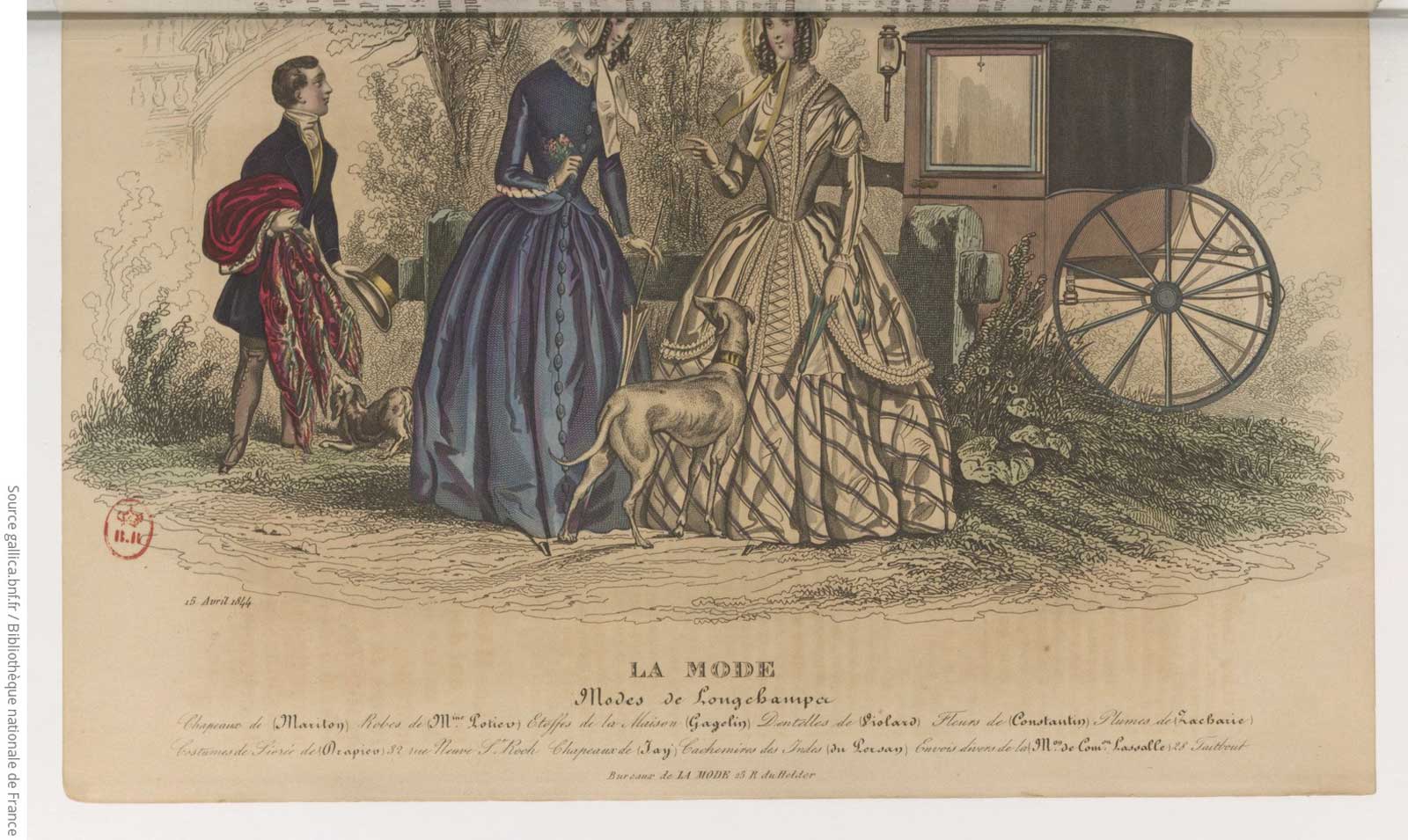 Inspiration for Flora Tristan's clothing in my portrait of her: an advertisement for women's fashion from the magazine LA MODE in April 1844 (source: Gallica, https://gallica.bnf.fr/)
-
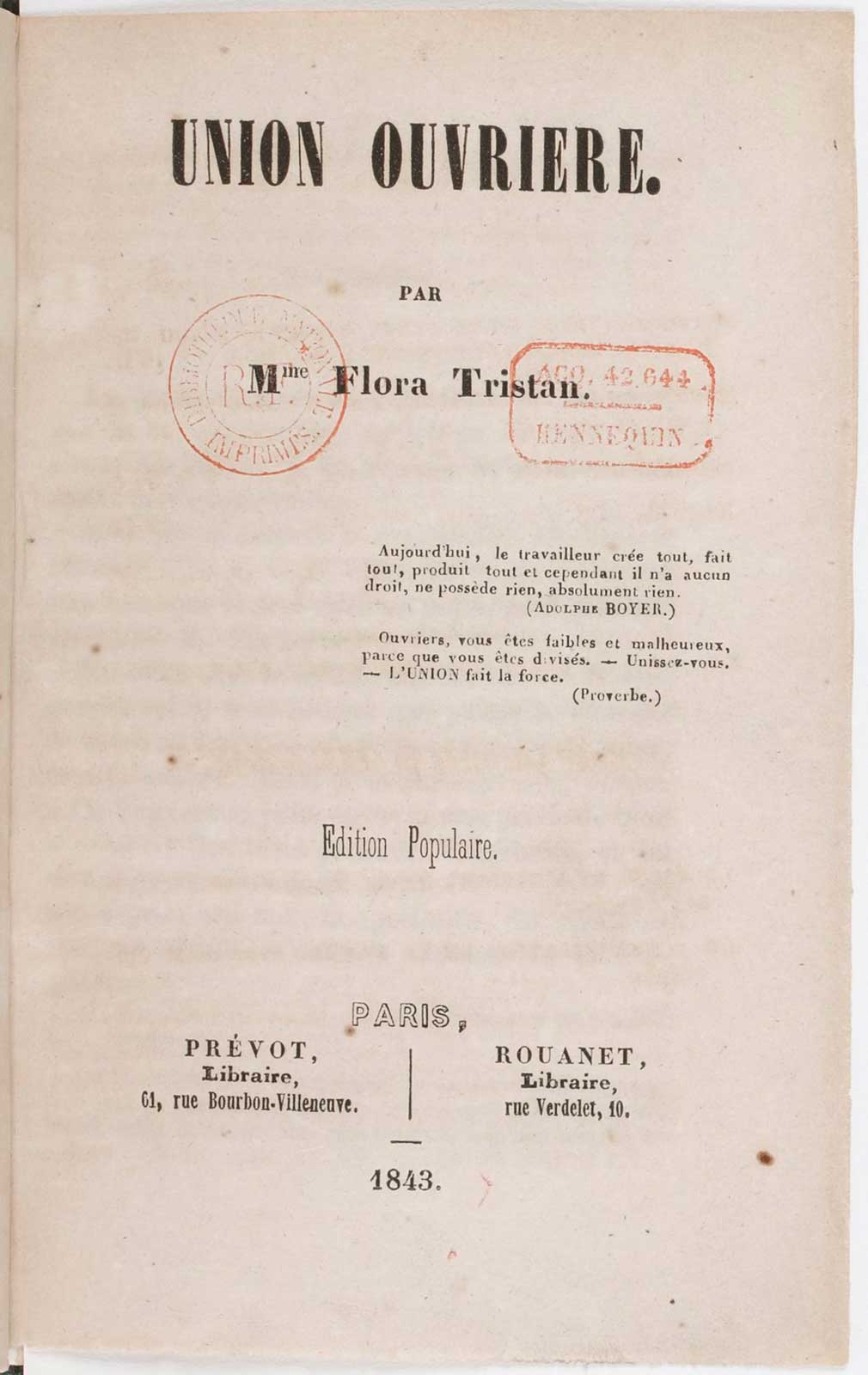 Flora Tristan's main work: UNION OUVRIERE (Workers' Union). The title page reads: ‘Workers, you are weakened because you are divided. Unite – strength lies in unity.’ (freely translated)
-
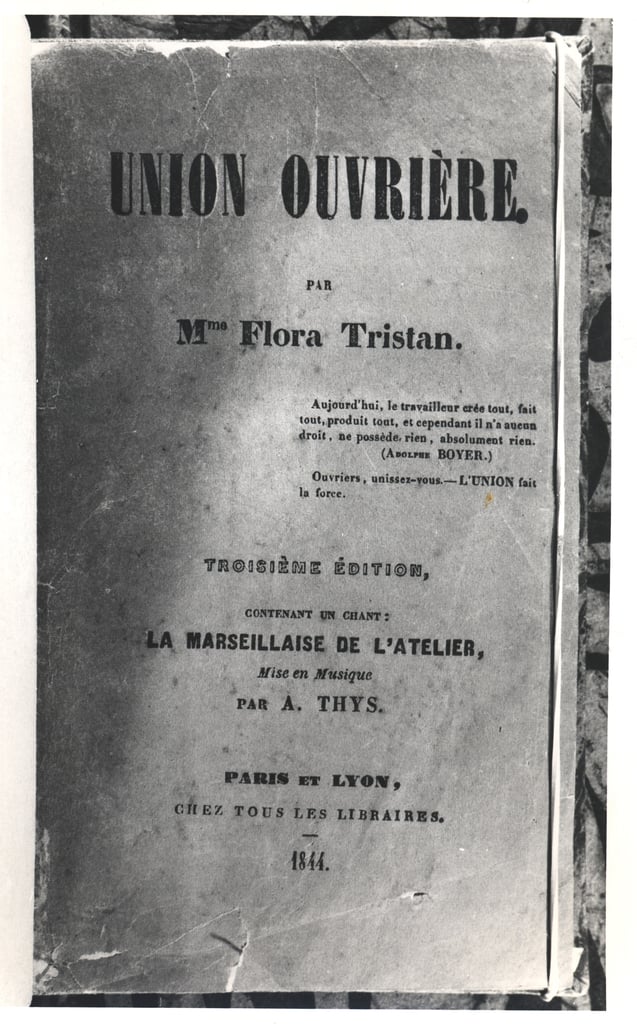 On the title page of the second edition, Tristan now writes in abbreviated form: ‘Workers, unite – in UNION lies strength.’ The second edition was published in 1844 and printed by WORMS in Paris-Montmartre.
-
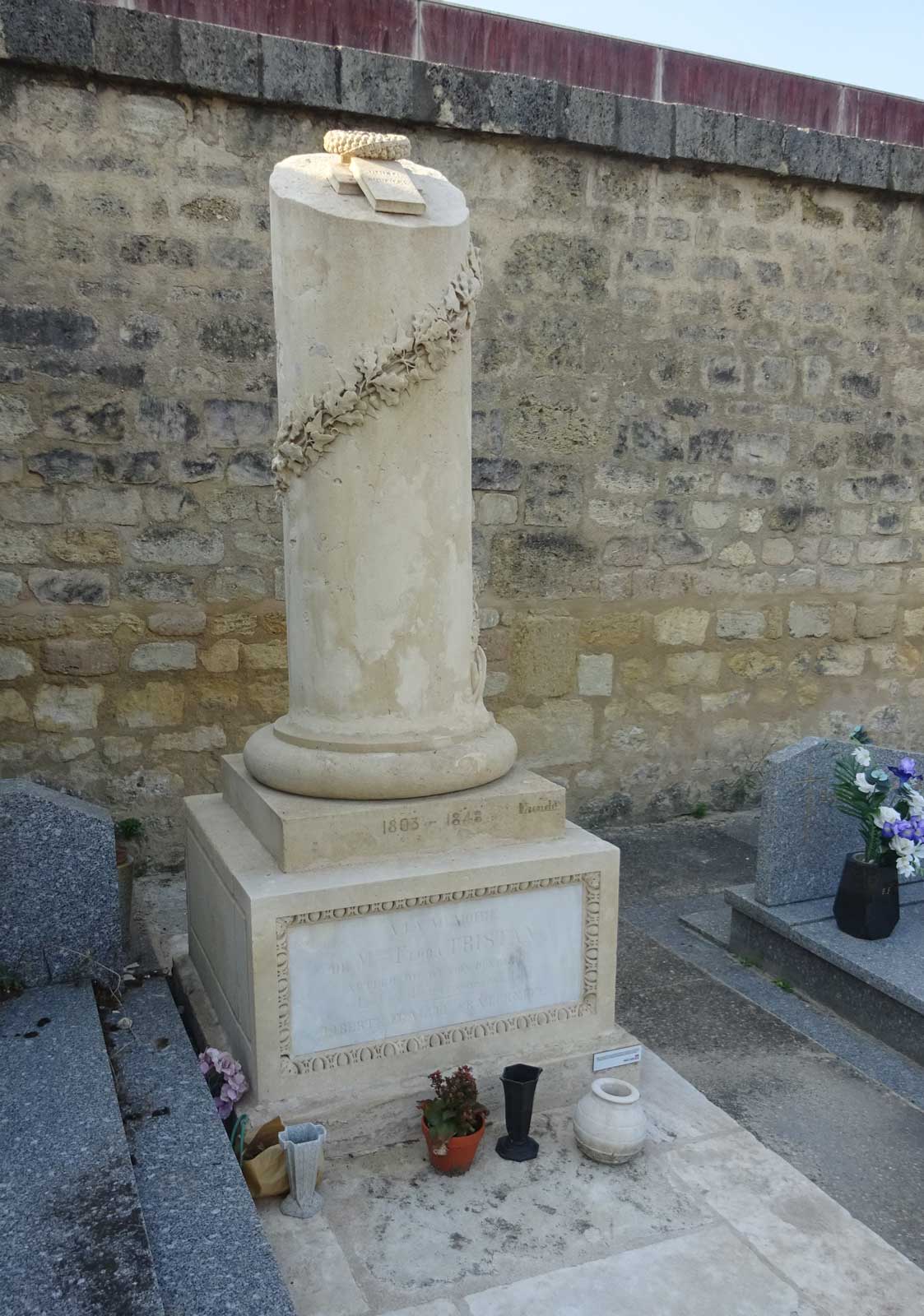 Workers collected donations and erected this tomb in Bordeaux in honour of Flora Tristan. (Photo from 2022, source: Wikipedia)
-
Biography
"Qu'on me vole pour m'agrandir, très bien, mais si on me vole pour me rogner, j'enrage." Flora Tristan
(It’s fine if people steal from me to make me bigger, but if they steal from me to make me smaller, it makes me angry.)
Family background and domestic violence – a possible explanation for Flora’s political awakening
Flora Tristan was born in 1803, the daughter of a wealthy Peruvian nobleman and a Frenchwoman. Following her father’s early death in 1807, the family fell into poverty. At the age of 18, Flora married her employer André Chazal, a painter who would later humiliate and abuse her. Tristan fled this marriage, as divorce was impossible, and became a fugitive from her husband – experiences that must have made her acutely aware of the injustice of social structures.
Political and social engagement: first travels, first publications
In 1833, Flora travelled to Peru to claim her father’s inheritance. There, she was outraged by class divisions and slavery – and she wrote about them. Her travelogue, "Pérégrinations d’une paria", published in 1837, was the first critical study of non-European realities from a female perspective. Back in Europe, she toured English industrial towns in 1839 and published her observations on the working class in 1840 – five years before Engels’ famous work. On her travels, she visited not only factories, but also ghettos, prisons and brothels.
Radicalisation: The ‘Union Ouvrière’ and Tristan’s quest to create a united labour movement
In her seminal work "L’union ouvrière", published in 1843, Tristan calls on workers to unite: “Come out of your isolation and join forces! Unity is strength.” She recognises the necessity of revolution and is the first to call for the joint realisation of workers’ liberation and women’s emancipation. By this time, Tristan is already under police surveillance and is not taken seriously by conservative forces. She is perceived as “radical” and is known – and notorious – in socialist circles as one of the active women, alongside figures such as George Sand and Bettina von Arnim. This in no way diminishes her conviction. In 1844, she travels restlessly and almost manically across France to encourage more workers to join trade unions, until she collapses from exhaustion in Bordeaux and dies of typhoid fever weeks later.
Tribute after her death
Tristan’s final work was “completed from her notes” and published in 1846, two years after her death, by her friend Alphonse-Louis Constant and Eliphas Levi, under the title "L’émancipation de la femme ou Le testament de la paria" (The Emancipation of Woman or The Testament of the Outcast).
A few years after her death, workers launched a fundraising campaign to erect a monument in her memory and in honour of the “Union Ouvrière”. This monument is located in the Chartreuse cemetery in Bordeaux. George Sand declined the request to contribute. Flora Tristan may have been controversial among her contemporaries during her lifetime because she was a “difficult person” – how many women have to face such judgement simply for fighting for a cause? In my view, her deep social convictions and concrete commitment make her worthy of being remembered as a great activist.